Segmented office networks
Separate network segments for ORED, OPES, and OEO provide a structured architecture and help isolate traffic between organizational units.
Design & Deployment
End-to-end design and deployment of a centrally managed, segmented office network using the TP-Link Omada ecosystem—including structured cabling, managed switching, wireless access points, guest access, and NAS storage.
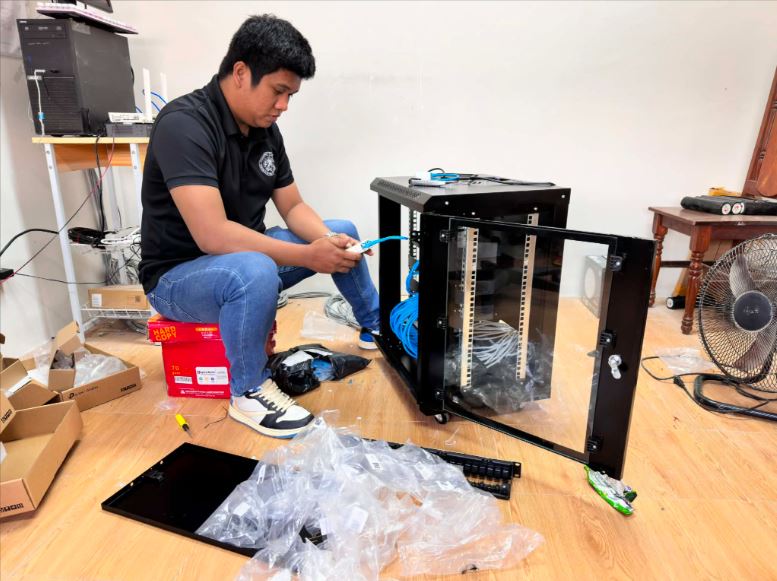
From physical cabling and hardware deployment to segmentation, wireless configuration, centralized management, and storage integration.
Platform
TP-Link Omada SDN
Scope
Physical and logical deployment
Segments
ORED · OPES · OEO
Services
LAN · WLAN · Guest Wi-Fi · NAS
Project overview
I designed and deployed the network infrastructure of the Commission on Elections Region 2 Office, covering both the physical installation and logical configuration of the network.
The project created a more organized, reliable, centrally managed, and scalable environment for wired and wireless connectivity, controlled guest internet access, centralized storage, workstations, printers, and other network-connected equipment.
Separate network segments were introduced for ORED, OPES, and OEO, allowing each office to operate within a structured architecture while sharing common infrastructure.
Network capabilities
Separate network segments for ORED, OPES, and OEO provide a structured architecture and help isolate traffic between organizational units.
A unified environment supports device and client monitoring, access-point management, configuration, troubleshooting, and performance monitoring.
Centrally managed EAP610 and EAP225 access points provide reliable wireless connectivity across office areas.
Visitors receive temporary voucher-based access without being placed directly on the office's primary internal network.
Authorized users and systems can access a dedicated platform for efficient internal file sharing and resource management.
The infrastructure can accommodate additional workstations, access points, network devices, and services as requirements grow.
Field work
Physical preparation, termination, organization, and installation of network cabling and equipment.
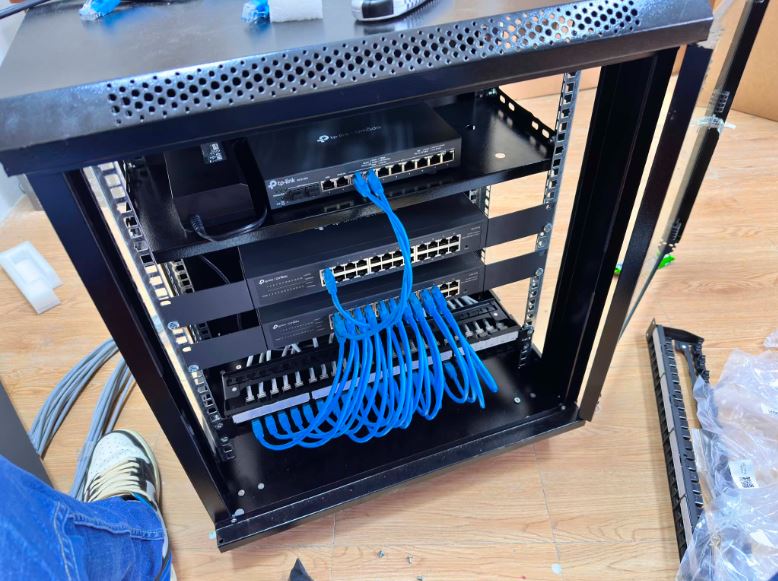
Organized switching, patching, and structured Ethernet connections inside the network rack.
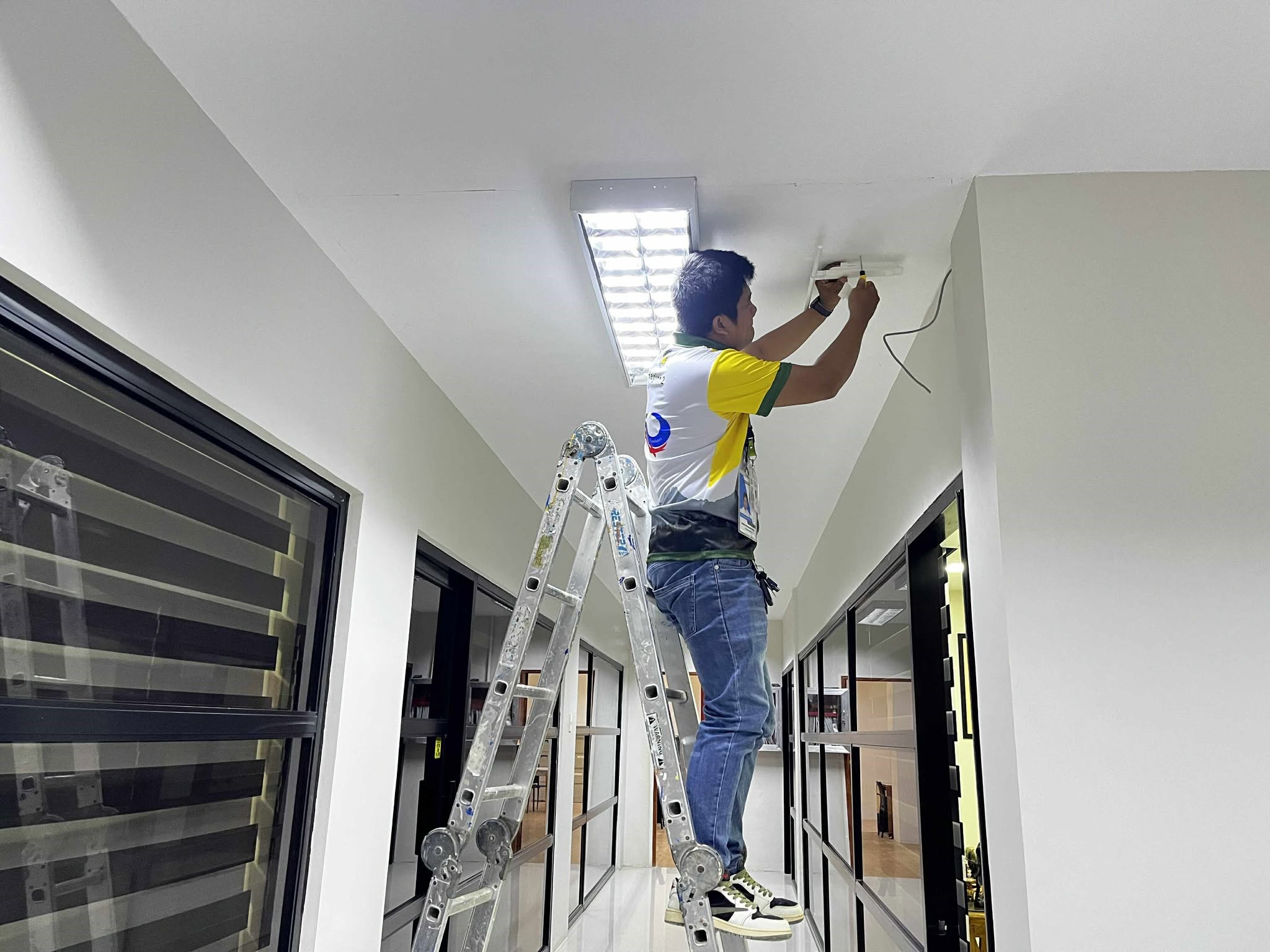
Deployment and positioning of wireless access points for reliable office-wide coverage.
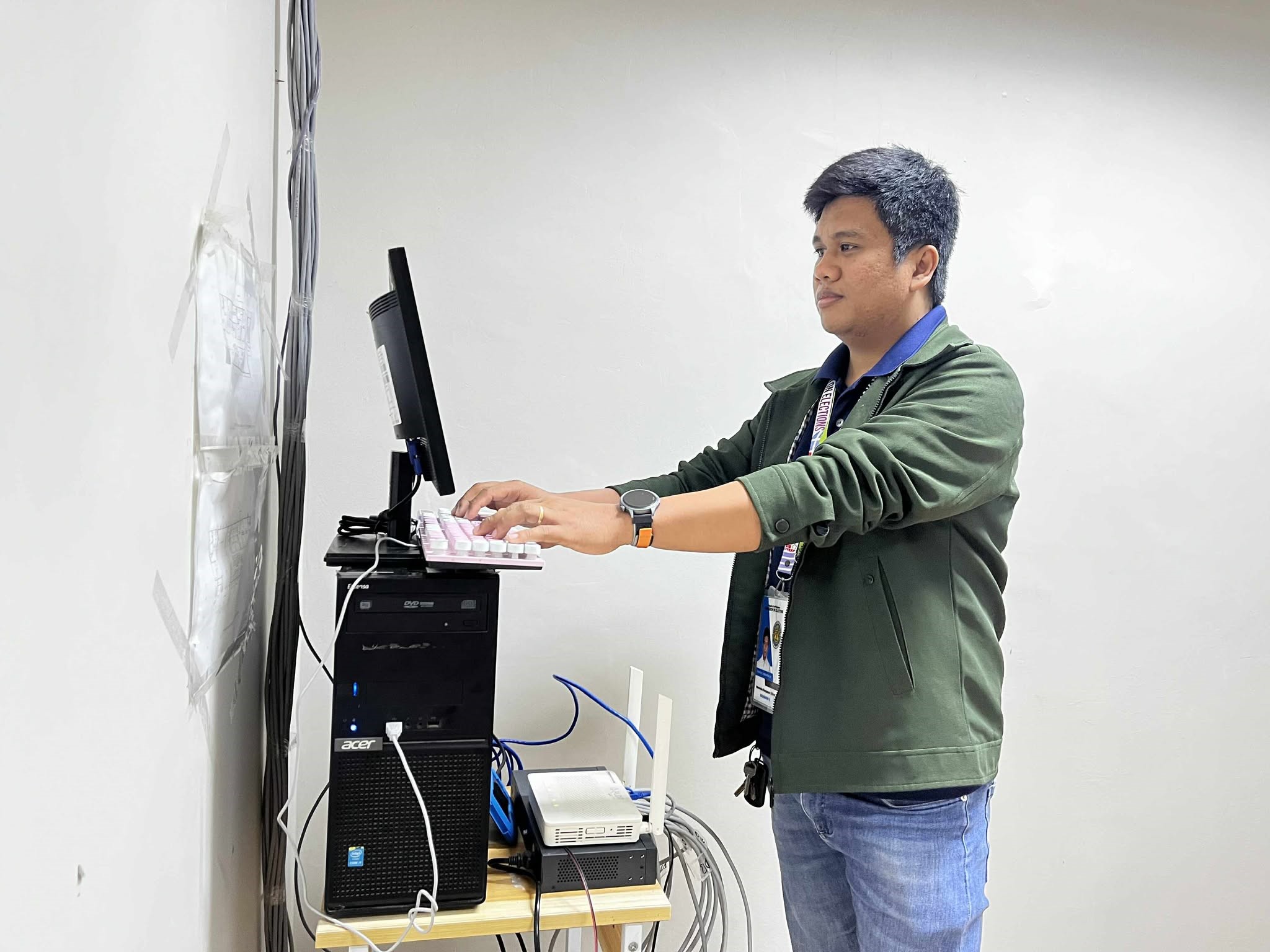
Configuration, monitoring, testing, and troubleshooting of the deployed infrastructure.
My role
I personally handled the design, installation, configuration, deployment, testing, troubleshooting, and monitoring of the network infrastructure.